
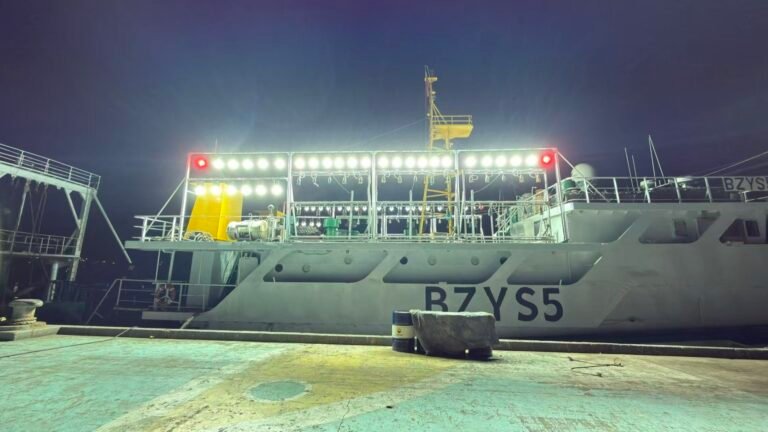
A fishing-light array has two jobs that can conflict: put useful light on the water and allow people to work and navigate safely. High output aimed at a wheelhouse window, hauling station or another vessel can make night operations harder, even when the deck looks “bright.”
Separate attracting light from task light
Aim attracting lights toward the intended water area and limit spill into crew sightlines. Provide dedicated, appropriately placed task lighting at winches, steps and line-handling points. Check shadows as well as glare: a bright source behind a worker can hide a rope or edge in shadow. Adjustable mounting and circuit zoning let the skipper change the pattern without switching off every work light.
Check from the bridge and from sea level
During commissioning, observe the installation from the wheelhouse, deck work positions and a safe external viewing point. Look for reflections on bridge glass, direct view of LED emitters, loss of dark adaptation and any masking or confusion of navigation lights. Recheck with the vessel pitching and rolling, since a beam that clears the bridge at the dock may sweep across it offshore.
Keep the COLREG lighting scheme recognisable
The IMO’s COLREGs require a proper lookout under Rule 5 and specify vessel lights under Part C. Rule 20 governs when lights are displayed, Rule 26 addresses fishing vessels, and Annex I covers positioning and technical details. Fishing or deck lights are not substitutes for prescribed navigation lights. The master and qualified installer should review the final arrangement for the vessel’s activity, size and operating waters, including local requirements.
This is a design and commissioning checklist, not a legal determination that a particular layout is compliant. Do not infer compliance from the fishing lamp’s IP rating or power rating.
A practical acceptance check
- Can the lookout identify traffic and required vessel lights from the bridge?
- Can deck crew see lines, hooks, trip points and controls without facing the light source?
- Can attracting and task lights be controlled independently?
- Are all navigation lights visible as required during each operating mode?
- Has the setup been checked at night under representative sea conditions?
abylure’s above-water 500W–1000W range can be discussed as part of a planned array. Send your mounting plan and bridge sightline photos to begin an optical review.