
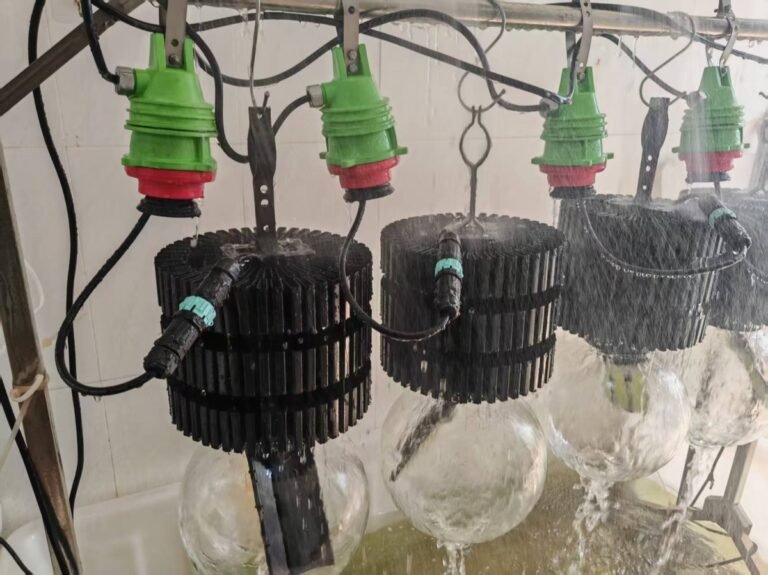
“Waterproof” is too vague for a commercial fishing vessel. A lamp above a working deck faces spray, washdown, salt deposits, vibration and long operating hours. Failures often begin at the cable entry, exposed fasteners, driver compartment or thermal path, even when the LED chips are sound.
Read the IP code correctly
IEC 60529 classifies enclosure protection against solids and water. IP67 includes a temporary immersion test under specified conditions; it does not make every installation suitable for continuous underwater operation. IP68 relates to immersion conditions agreed and marked for the product. A high-pressure washdown claim requires its own relevant test evidence. Avoid treating IP67, IP68 and high-pressure jet ratings as a simple ladder of “better in every situation.” Check the test report, the installed cable assembly and the exact mounting orientation.
abylure’s published platform is rated IP67 for above-water use. It should not be specified as a submersible attracting light.
Corrosion is a system problem
Ask which materials are used for the housing, screws, brackets and glands; how dissimilar metals are isolated; and what coating or anodising process is applied. Salt can remain on fins and around seals after spray dries. A salt-mist test can provide useful evidence, but the test method, duration and acceptance criteria matter more than a bare “salt-spray tested” claim. IEC 60068-2-52 describes cyclic salt-mist testing for equipment exposed to salt-laden atmospheres.
Heat and vibration deserve equal attention
High-power LEDs and drivers lose reliability when heat cannot escape. Check the heat path from source to fins, mounting clearances and whether ropes, covers or nearby structures block airflow. Confirm vibration testing or field evidence for the specific mounting position. During inspections, look for loosened fasteners, damaged glands, cracked seals, salt bridging and reduced light output. Cleaning should follow the supplier’s maintenance instructions.
Procurement questions that prevent a repeat failure
- Is the rating for the assembled lamp, cable entry and installed orientation?
- Which corrosion and vibration test reports apply to this configuration?
- What are the ambient temperature limits and mounting clearances?
- Which seals, drivers and fasteners are replaceable onboard?
Compare abylure’s above-water models or send photos of your failed installation for a more useful retrofit discussion.