
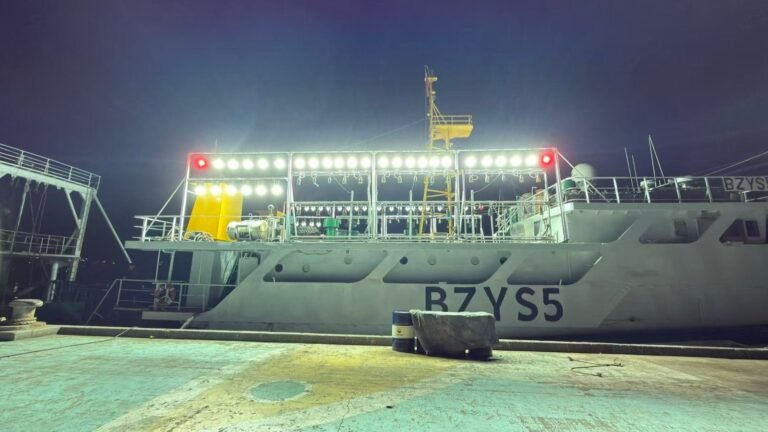
Choosing a Commercial LED Fishing Light
Selecting an LED fishing light is not simply a matter of choosing the highest wattage. Commercial vessel operators also need to consider electrical compatibility, optical performance, marine protection, heat management, installation requirements, and long-term operating costs.
A well-matched lighting system can improve useful illumination around the vessel while reducing unnecessary energy consumption and maintenance work. This guide explains the main factors buyers should evaluate before requesting a quotation.
1. Start With the Vessel’s Electrical System
Input voltage is one of the first specifications to confirm. Fishing vessels may use different power systems depending on their size, generator configuration, operating region, and existing lighting equipment.
Before choosing a model, provide the supplier with:
- Available AC input voltage
- Voltage fluctuation range
- Frequency
- Generator capacity
- Existing lamp wattage
- Socket or mounting type
- Number of lights required
Do not select a light only by its rated power. A 500W or 1000W product still needs to match the vessel’s actual electrical system.
abylure offers multiple high-output marine LED configurations covering different voltage requirements. Final electrical parameters should always be confirmed against the project specification before production.
2. Compare Useful Light, Not Wattage Alone
Wattage describes electrical power consumption, but it does not tell buyers how effectively the light is delivered to the working area.
When comparing commercial LED fishing lights, consider:
- Rated luminous efficacy
- Beam angle
- Light distribution
- Optical uniformity
- Target operating area
- Installation height and spacing
A high-efficiency optical system can produce more useful illumination with less wasted light. Wide-beam designs may help create a more even lighting area, while project-specific optical configurations may be required for particular vessel layouts.
For reference, selected abylure marine LED configurations are designed for high-output applications in the 500W–1000W range, with rated efficacy and beam specifications depending on the final model.
3. Select the Appropriate Light Spectrum
Different fishing operations may require different color temperatures or spectral characteristics. The preferred configuration can depend on target species, fishing method, water conditions, regional experience, and operating environment.
When requesting a quotation, buyers should explain:
- Target species
- Fishing method
- Typical operating depth and water conditions
- Preferred color temperature
- Existing lamp color
- Whether a custom spectrum is required
For fleet projects, sample testing is recommended before confirming a large production order. This allows the buyer to evaluate the selected spectrum and optical configuration under actual operating conditions.
4. Check Marine Protection and Corrosion Resistance
Commercial marine lighting operates in a demanding environment. Salt spray, moisture, vibration, temperature changes, and continuous operation can all affect product reliability.
Important construction details include:
- Waterproof and dust-protection rating
- Corrosion-resistant housing
- Sealed electrical connections
- Marine-suitable fasteners
- Cable and connector protection
- Resistance to vibration and thermal cycling
An IP rating is important, but it should not be the only factor considered. Buyers should also review how the housing, seals, cables, driver, and mounting components work together as a complete system.
Selected abylure products use IP67-rated protection configurations. For more details on marine sealing standards and corrosion-resistant maintenance, check our Marine Lighting FAQs. Final protection requirements should be confirmed for the intended installation position and operating environment.
5. Evaluate Thermal Management
High-power LEDs generate heat during operation. If this heat is not controlled effectively, light output, driver performance, and component life can be affected.
A professional marine LED light should provide a clear thermal path from the LED module to the external housing or heat sink. Buyers should review:
- Heat-sink size and structure
- Housing material
- Airflow around the installed light
- Driver operating temperature
- Required clearance between units
- Continuous operating conditions
Compact dimensions are useful, but reducing the thermal-management area too aggressively can create reliability risks. The light should be evaluated as an electrical, optical, and thermal system—not as an LED chip alone.
6. Confirm Installation and Retrofit Requirements
For vessel upgrades, compatibility with the existing installation can reduce conversion time and labor costs.
Before ordering, confirm:
- Base or socket type
- Mounting dimensions
- Available installation space
- Existing wiring
- Required cable length
- Clearance around the heat sink
- Preferred installation orientation
For retrofit projects, photographs and dimensions of the current lamps are extremely helpful. Buyers can also provide drawings of the installation area so the engineering team can check compatibility before production.
abylure supports project-specific discussions for base assemblies, housings, electrical configurations, optical requirements, and packaging.
7. Consider Total Operating Cost
The lowest purchase price does not always produce the lowest operating cost. Commercial operators should also consider:
- Energy consumption
- Expected maintenance frequency
- Installation labor
- Spare-unit requirements
- Replacement accessibility
- Shipping and packaging
- Technical support
- Production consistency for repeat orders
For fleet projects, product consistency is especially important. A lighting specification that can be reproduced across multiple vessels makes installation, maintenance, and spare-parts planning easier.
Information to Include in Your RFQ
A detailed request for quotation helps the supplier recommend a more suitable configuration and reduces unnecessary communication.
Include the following information:
- Vessel type
- Target quantity
- Required wattage
- Input voltage and frequency
- Current lamp specifications
- Target species or application
- Preferred spectrum or color temperature
- Base or mounting requirements
- Delivery country
- Required documentation
- Expected delivery schedule
Photos, drawings, and existing product labels can also help the engineering team evaluate the project.
Final Selection Checklist
Before placing an order, confirm that:
- The input voltage matches the vessel
- The light output suits the working area
- The beam angle matches the installation layout
- The spectrum suits the target application
- The housing is suitable for the marine environment
- Thermal clearance is sufficient
- The mounting method is compatible
- Documentation requirements are agreed
- Samples have been evaluated when necessary
- Final specifications are included in the purchase agreement
Talk to the abylure Engineering Team
Every commercial vessel project has different electrical, installation, and operating requirements. abylure provides high-output marine LED lighting solutions for fleet retrofit and project-specific applications.
To discuss a project, send your vessel type, target quantity, input voltage, current lamp information, preferred wattage, and application requirements to:
Our team will review the information and help prepare a suitable product configuration and quotation.