
BUYER GUIDE / POWER SELECTION
Start with voltage, then compare power.
Choosing LED fishing light wattage for a commercial vessel requires more than selecting the largest number. Compare the vessel supply, mounting arrangement, lamp count and required coverage before deciding between 500W, 600W, 800W and 1000W configurations.
Request a project quoteCompare the series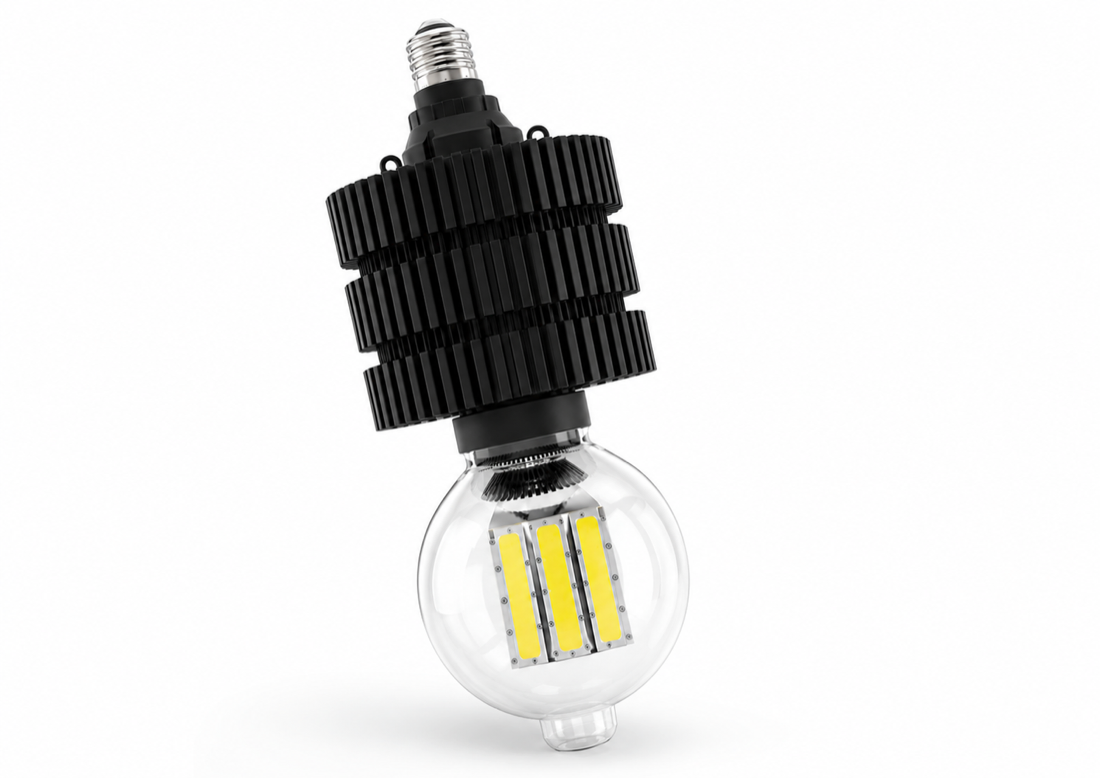
Compare the four rated configurations
| Model | AC input | Weight | Rated efficacy |
|---|---|---|---|
| 500W / ABY-500 | 140–300 VAC | 2.2 kg | 145 lm/W |
| 600W / ABY-600 | 160–300 VAC | 2.8 kg | 145 lm/W |
| 800W / ABY-800 | 116–277 VAC | 3.3 kg | 145 lm/W |
| 1000W / ABY-1000 | 330–430 VAC | 3.2 kg | 140 lm/W |
All four standard configurations list a 119° rated beam and power factor of 0.95. These are configuration references; confirm the selected driver and current specification before ordering. See the complete product series for dimensions, driver output and sample-report context.
1. Eliminate incompatible input ranges
Record the actual lighting-circuit supply before comparing lamp power. The 1000W model is rated 330–430 VAC, whereas the 800W model sheet lists 116–277 VAC. A 220V vessel should not select the standard 1000W configuration on wattage alone. For a non-standard supply, request an approved lamp-and-driver configuration.
A lamp holder marked E40 does not establish voltage compatibility. The holder, lamp, constant-current driver, wiring and circuit protection must be assessed together. The vessel wiring and voltage checklist explains the information to collect for an electrical review.
2. Compare total array demand
Multiply the number of proposed lamps by their rated lamp wattage as a first comparison, then obtain total system input for the matched drivers. Account for simultaneous vessel loads and the generator operating conditions. Do not convert the lamp-wattage difference directly into a promised fuel-saving percentage.
A smaller individual lamp may still lead to a larger total load if the layout uses more units. Compare complete proposals with the same coverage objective and agreed operating conditions. For a deeper assessment, read the generator-load and retrofit payback guide.
3. Check the mounting envelope
The 500W and 600W configurations have nominal 520 × 230 mm dimensions. The 800W and 1000W configurations are nominally 580 × 240 mm. Weight also differs: 2.2 kg, 2.8 kg, 3.3 kg and 3.2 kg respectively. Review holder condition, support and available clearance for the selected unit.
The standard adjustable E39/E40 assembly is intended for compatible vertical holders. Confirm mounting and directional adjustment using the approved installation instructions. For a layout review, supply lamp positions, mounting height and photographs rather than only a requested wattage.
4. Separate rated data from sample reports
A photometric report describes a tested configuration. It does not automatically establish the input range, beam or output of every production variant. The published 800W sample uses a different test voltage from the standard model sheet; ask for the documents applicable to your chosen driver and lamp combination.
Which power class should you shortlist?
- 500W: evaluate the lowest rated lamp power and lightest standard configuration when the proposed coverage supports it.
- 600W: compare an intermediate power class when its input range and layout fit the project.
- 800W: evaluate the fleet-retrofit platform against its rated supply, mounting envelope and relevant report.
- 1000W: review the high-voltage supply requirement first, then assess the complete lighting layout.
Prepare a specification that can be quoted
Send the preferred model, quantity, vessel voltage, existing lamps and ballast details, mounting photographs and fishing method. For bulk or private-label purchases, include destination market, labeling and documentation requirements. Use the retrofit planning page or OEM/ODM supply page to structure the inquiry.
Check E39/E40 retrofit compatibility
Before selecting a lamp or approving a fleet sample, review the E39/E40 LED fishing light compatibility checklist for holder identification, vertical mounting, clearance and matched-driver requirements.
Discuss your vessel or bulk supply requirement
Share the model, quantity, vessel supply voltage and installation details. We will review the configuration and confirm sample, documentation and quotation requirements.
Send an RFQinfo@abylure.com